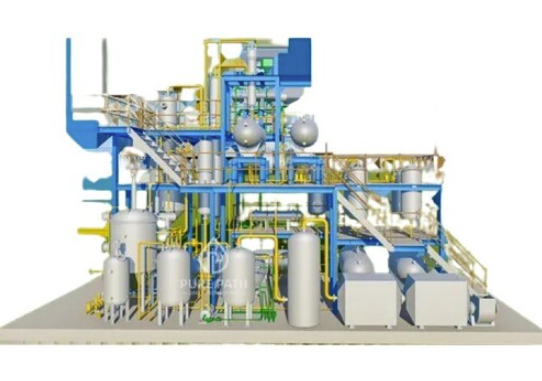
Industries across the world generate significant amounts of used oil, which can pose serious environmental challenges if not managed properly. Converting waste oil to base oil offers a sustainable solution by turning hazardous waste into high-quality, reusable products. This process not only reduces environmental impact but also provides economic benefits by creating a renewable source of base oil for industrial and automotive applications.
Understanding the Process
Turning waste oil into base oil involves several key steps designed to remove contaminants and recover valuable oil fractions. These steps typically include:
- Pre-Treatment – Filtering out sludge, water, and solid impurities.
- Distillation – Separating usable oil from contaminants through controlled heating.
- Refining – Further purifying the oil to achieve high-quality base oil standards.
This process ensures that the recycled oil meets industry requirements for lubricants, diesel, or other industrial applications.
Industrial Applications
The recovered base oil can be used across various industries:
- Automotive Manufacturing – Produces lubricants for engines and machinery.
- Industrial Production – Provides high-quality base oil for machinery and equipment.
- Energy Sector – Can be blended with diesel or other fuels for energy production.
Using recycled base oil allows companies to reduce costs and dependency on fresh crude oil.
Benefits of Converting Waste Oil to Base Oil
Converting waste oil into base oil provides multiple advantages:
- Environmental Sustainability – Reduces pollution caused by improper disposal of used oil.
- Cost Efficiency – Recovered oil reduces the need to purchase new raw materials.
- Resource Optimization – Maximizes the value of industrial waste by producing usable oil.
- Regulatory Compliance – Helps industries meet environmental and safety standards.
Key Considerations for Choosing a Recycling Plant
When investing in a plant for waste oil to base oil, businesses should consider:
- Quality of Technology – Advanced filtration and distillation systems ensure high-quality output.
- Energy Efficiency – Plants that optimize energy consumption reduce operational costs.
- Scalability – Plants should accommodate different production capacities depending on the industry size.
- Technical Support – Manufacturers should offer training, maintenance, and troubleshooting support.
A well-designed plant ensures safe, efficient, and profitable operations.
Modern Technologies in Base Oil Production
Advanced recycling technologies allow for high-quality base oil production from used oils. Some modern innovations include:
- Automated Monitoring Systems – Maintain precise temperature, pressure, and flow.
- Enhanced Filtration Methods – Remove more impurities for cleaner base oil.
- Energy Optimization Designs – Reduce operational costs while maintaining efficiency.
See also: The Tech Behind Online Bus Ticket Booking Systems
Environmental and Economic Impact
Processing waste oil into base oil minimizes environmental hazards associated with toxic chemicals and heavy metals found in used oils. By converting waste oil:
- Contaminants are safely removed or neutralized.
- Recycled base oil reduces dependence on new crude oil extraction.
- Industries contribute to sustainable and responsible practices.
Economically, businesses benefit from reduced raw material costs, lower energy consumption, and potential revenue from selling high-quality recycled oil.
Conclusion
Investing in a waste oil to base oil solution is a strategic choice for industries aiming for sustainability and operational efficiency. By transforming waste oil into valuable base oil, companies minimize environmental hazards, optimize resources, and reduce costs. Choosing a high-quality plant ensures long-term reliability, regulatory compliance, and eco-friendly operations, making it a smart investment for modern industrial needs.
Frequently Asked Questions (FAQs)
1. What types of oil can be converted to base oil?
Used engine oils, industrial lubricants, and other waste oils can be refined into high-quality base oil.
2. How do I select a reliable plant for converting waste oil to base oil?
Consider technology quality, energy efficiency, plant scalability, and manufacturer support services.
3. What are the main benefits of producing base oil from waste oil?
Benefits include environmental sustainability, cost savings, resource optimization, and high-quality recycled oil output.