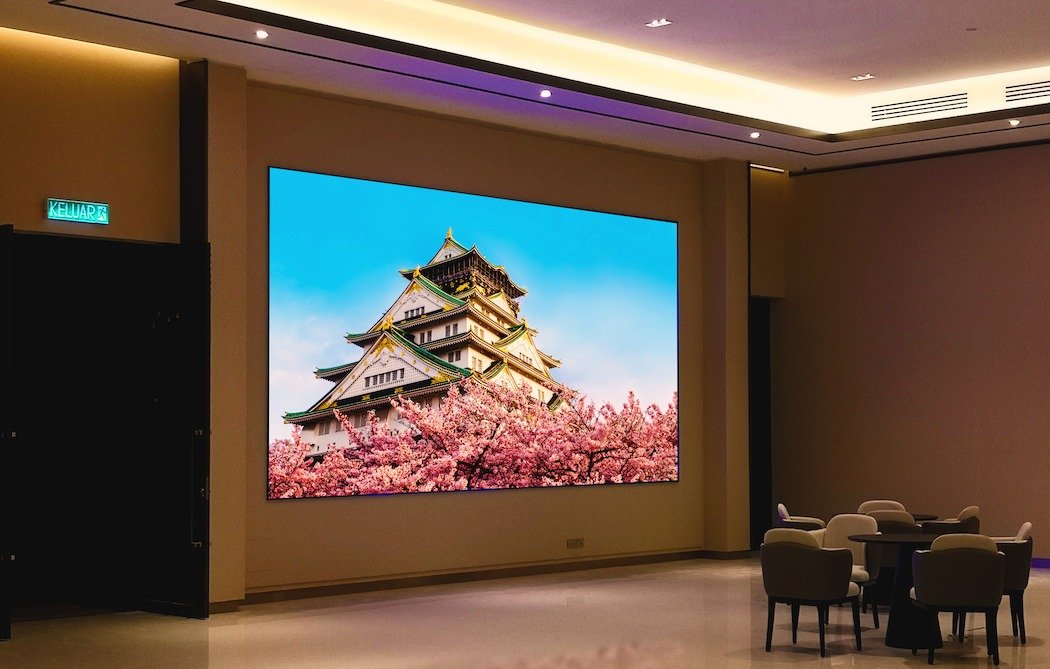
When choosing a display solution for an indoor led screen installation, the number of options available can feel overwhelming. From pixel pitch to refresh rates, the technical jargon alone is enough to give anyone pause. Yet one specification tends to come up more than any other in professional settings: P3.
P3 LED screens have become the go-to choice for businesses, broadcasters, and event spaces that demand sharp, high-quality visuals at close range. This guide breaks down exactly what a P3 screen is, how it compares to alternatives, and whether it’s the right fit for your needs.
What Does P3 Mean in LED Screens?
The “P” in P3 stands for “pixel pitch”—the distance in millimetres between the centres of two adjacent pixels. A P3 screen, therefore, has a pixel pitch of 3mm. The smaller the pitch, the more densely packed the pixels, and the higher the image resolution.
To put this into perspective:
- P3: 3mm pixel pitch — ideal for close-range, high-detail viewing
- P4: 4mm pixel pitch — suited for medium viewing distances
- P5: 5mm pixel pitch — better for larger spaces where viewers stand further back
- P6: 6mm pixel pitch — typically used in larger venues or semi-outdoor settings
The relationship between pixel pitch and viewing distance is straightforward: divide the pixel pitch by 0.3 to get the minimum recommended viewing distance in metres. For a P3 screen, that’s roughly 10 metres. Get closer than that, and individual pixels may become visible.
Technical Specifications of P3 LED Screens
P3 displays are engineered for environments that demand precision. Here’s what you can typically expect from a standard P3 LED screen:
- Resolution: Because of the tight pixel pitch, P3 screens deliver high pixel density, producing crisp, detailed images even on smaller panel sizes.
- Brightness: Indoor P3 screens generally operate between 800 and 1,500 nits—bright enough to perform well under artificial lighting without causing eye strain.
- Colour depth: Most P3 panels support 16-bit colour processing, enabling smooth gradients and accurate colour reproduction.
- Refresh rate: High-quality P3 screens offer refresh rates of 3,840Hz or higher, eliminating flicker and ensuring clean capture by cameras and video equipment.
- Power consumption: Indoor P3 panels are relatively energy-efficient compared to outdoor models, with typical power draw ranging from 150W to 300W per square metre.
Thermal management is worth factoring in during installation. Adequate ventilation helps prevent overheating, which directly affects both performance and lifespan.
Where Are P3 LED Screens Used?
The versatility of P3 displays makes them a popular choice across a wide range of environments.
Retail and storefronts
Retailers use P3 screens to create immersive product displays and eye-catching promotional content. The high resolution ensures that imagery looks polished and professional, even when customers view it from just a few metres away.
Corporate offices and conference rooms
In boardrooms and collaboration spaces, P3 screens replace traditional projectors and flat-panel displays, offering better brightness, wider viewing angles, and a seamless, bezel-free appearance. They’re particularly effective for video conferencing and data visualisation.
Entertainment venues and event spaces
Concert halls, sports arenas, and hospitality venues rely on P3 screens for stage backdrops, informational displays, and immersive experiences. The high refresh rate is especially valuable in live event contexts where motion clarity matters.
Broadcasting and control centres
Television studios and operations control rooms demand the highest image fidelity. P3 screens meet these requirements with precise colour accuracy and flicker-free performance—essential when cameras are rolling.
The Key Advantages of P3 LED Screens
Exceptional image clarity at close range
P3’s 3mm pixel pitch delivers noticeably sharper images than P4 or P5 alternatives when viewed at short distances. For indoor settings where audiences are within 3–10 metres of the screen, this difference is significant.
A cost-effective middle ground
P3 screens sit in a practical sweet spot. Higher-resolution options like P1.5 or P2 offer even finer detail, but at a considerably higher cost. For most commercial applications, P3 provides outstanding image quality without the premium price tag.
Flexible installation options
P3 panels are available in modular configurations, making them adaptable to a wide variety of spaces. Whether you need a flat wall-mounted display, a curved installation, or a suspended ceiling screen, P3 modules can be arranged to fit.
Energy efficiency
Compared to projectors and older display technologies, P3 LED screens consume significantly less power over time. Many modern P3 panels also include automatic brightness adjustment, reducing energy usage in lower-light conditions.
Installation and Maintenance: What to Know Before You Buy
Space and mounting requirements
Before purchasing, assess the room dimensions carefully. The aspect ratio, viewing distance, and ambient lighting will all influence which panel configuration works best. Most indoor P3 installations require a flat, structurally sound mounting surface and access to adequate power supply points.
Routine maintenance
LED screens are generally low-maintenance, but regular care extends their lifespan considerably. Best practices include:
- Cleaning the screen surface with anti-static cloths to prevent dust build-up
- Inspecting cabinet connections and power supplies every six to twelve months
- Monitoring for dead pixels or colour inconsistencies and replacing faulty modules promptly
Longevity expectations
A well-maintained P3 LED screen can last upwards of 100,000 hours—that’s over 11 years of continuous operation. Most manufacturers offer warranties ranging from two to five years, covering manufacturing defects and component failures.
P3 LED Screens vs. Alternative Display Technologies
P3 vs. projectors
Projectors struggle in brightly lit environments and require significant throw distance to produce large images. P3 LED screens, by contrast, perform consistently regardless of ambient light conditions and take up far less physical space. For permanent installations, LED is almost always the better long-term investment.
P3 vs. LCD and traditional flat panels
LCD displays have bezels that create visible seams when tiled together, which disrupts the visual continuity of large displays. P3 LED panels join seamlessly, making them the preferred option for video walls. LCD panels may still win on upfront cost for single-screen installations, but P3 offers superior scalability.
When should you choose a different pixel pitch?
P3 isn’t always the right answer. Choose a finer pitch (P1.5–P2.5) if viewers will be seated within 1–3 metres, such as in control rooms or retail kiosks. Opt for a coarser pitch (P4–P6) if the installation covers a large area and viewers are consistently further than 10 metres away. The goal is always to match the pixel pitch to the typical viewing distance.
See also: The Tech Behind Online Bus Ticket Booking Systems
Is a P3 LED Screen Right for Your Business?
P3 LED screens represent one of the most reliable and versatile indoor display solutions available. The combination of high image quality, flexible installation, energy efficiency, and long-term durability makes them a sound investment for businesses that take their visual communications seriously.
As LED technology continues to advance, prices are steadily decreasing while performance improves meaning P3 screens are becoming accessible to a broader range of organisations. Whether you’re upgrading a conference room, launching a new retail concept, or building a broadcast studio, P3 is a specification worth considering seriously.
The best starting point? Define your viewing distance, your budget, and your content requirements. From there, the right pixel pitch—and the right screen—will become clear.