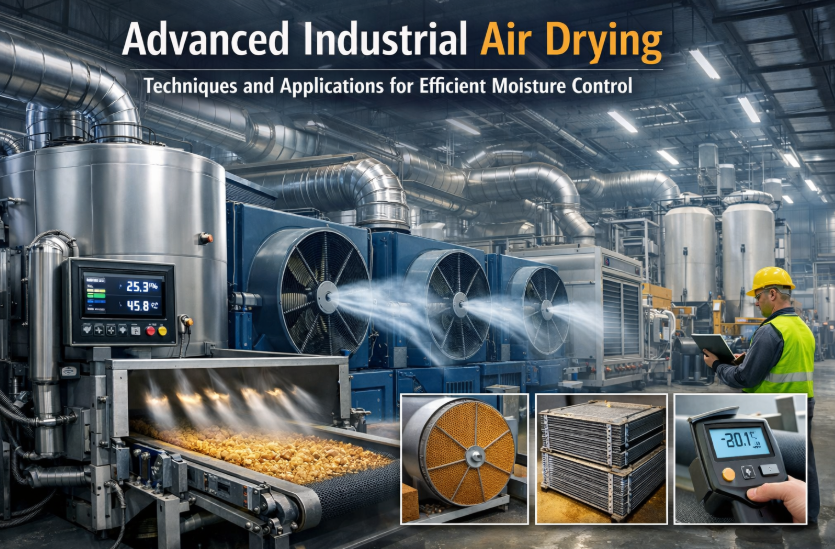
Industrial air drying plays a critical role in modern manufacturing and production processes. Controlling moisture is essential for maintaining product quality, extending equipment life, and ensuring operational efficiency. From food processing to chemical production, the right air drying techniques can make the difference between consistent performance and costly downtime. This article explores advanced industrial air drying methods, their applications, and best practices to achieve efficient moisture control.
Understanding Industrial Air Drying
At its core, industrial air drying involves the removal of moisture from air streams or materials using specialized equipment. Unlike basic drying methods, industrial air drying is designed to handle large-scale operations where precision and reliability are crucial. Moisture control is not only important for product quality but also for preventing corrosion, bacterial growth, and process inefficiencies.
Industrial air drying systems are used in a wide range of industries including pharmaceuticals, food and beverage, automotive, and electronics. The effectiveness of these systems depends on several factors such as the type of material being dried, the moisture content, temperature, and airflow.
Common Industrial Air Drying Techniques
Several industrial air drying techniques have been developed to address different operational needs. Understanding these methods allows companies to select the most suitable system for their processes.
1. Desiccant Air Drying
Desiccant air dryers use materials that absorb moisture from the air. These systems are highly effective for applications requiring extremely low humidity levels. Desiccant drying is often used in pharmaceutical manufacturing and electronics production, where even trace amounts of moisture can compromise product integrity. Regeneration of the desiccant material is required periodically, which ensures continuous performance.
2. Refrigerated Air Drying
Refrigerated air dryers work by cooling the air to condense water vapor, which is then removed from the system. This method is energy-efficient and suitable for most industrial applications, especially where moderate humidity control is sufficient. Refrigerated air dryers are commonly used in food processing, packaging, and compressed air systems.
3. Membrane Drying
Membrane air drying uses semi-permeable membranes to separate water vapor from air. This technique is compact, requires less maintenance, and is ideal for applications where space is limited. Membrane drying is often chosen for medical equipment, analytical instruments, and other precision industries.
4. Adsorption Drying
Adsorption dryers use a solid material to attract and hold water molecules. Unlike desiccants, adsorption dryers can achieve extremely low dew points, making them suitable for high-precision industrial processes. They are widely applied in chemical plants, gas processing, and laboratories where air purity and dryness are critical.
Key Benefits of Industrial Air Drying
Implementing advanced industrial air drying systems offers multiple advantages:
- Improved Product Quality: Drying materials to precise moisture levels ensures consistency, reduces defects, and maintains structural integrity.
- Extended Equipment Life: Removing moisture prevents corrosion and rust, which can damage machinery and reduce operational efficiency.
- Energy Efficiency: Modern air drying systems are designed to use less energy, reducing operational costs and environmental impact.
- Enhanced Safety: Controlling humidity minimizes the risk of microbial growth, chemical reactions, and other hazards associated with excess moisture.
- Operational Reliability: Reliable drying systems reduce downtime and production interruptions, ensuring smoother workflow in industrial operations.
Applications Across Industries
Industrial air drying is not limited to a single sector. Its applications span diverse industries that require precise moisture control.
Food and Beverage Processing
In food processing, controlling moisture is essential to maintain shelf life and prevent microbial contamination. Industrial air drying is used for dehydrating fruits, vegetables, and grains, as well as maintaining optimal conditions during packaging and storage.
Pharmaceutical Manufacturing
Pharmaceutical products are highly sensitive to moisture. Even slight variations can compromise potency and stability. Industrial air drying ensures that raw materials and finished products remain dry, improving safety and compliance with regulatory standards.
Chemical and Petrochemical Industries
Chemical manufacturing often involves reactions that are sensitive to water content. Industrial air drying helps prevent unwanted reactions, ensures product consistency, and protects equipment from corrosion.
Electronics and Semiconductor Production
Moisture can damage delicate electronic components and semiconductors. Air drying systems are used to create controlled environments that protect sensitive equipment and ensure manufacturing precision.
Automotive and Aerospace
Industrial air drying is used in paint booths, coating processes, and material treatment to prevent defects and achieve high-quality finishes. It also helps maintain the integrity of hydraulic and pneumatic systems.
See also: The Tech Behind Online Bus Ticket Booking Systems
Choosing the Right Industrial Air Drying System
Selecting an air drying system requires careful consideration of several factors:
- Moisture Requirements: Identify the acceptable moisture levels for your process. Some applications require extremely low humidity, while others can tolerate moderate levels.
- Capacity Needs: Consider the volume of air or materials to be dried and choose a system that can handle peak demands efficiently.
- Energy Efficiency: Evaluate the energy consumption of different systems. Refrigerated air dryers are generally more energy-efficient, while desiccant dryers may require more power for regeneration.
- Maintenance and Reliability: Systems with lower maintenance requirements reduce downtime and labor costs. Adsorption and membrane dryers typically need less frequent servicing compared to desiccant systems.
- Cost vs. Benefit: Balance upfront costs with long-term benefits such as energy savings, improved product quality, and reduced equipment wear.
Best Practices for Effective Moisture Control
To maximize the benefits of industrial air drying, it’s important to implement best practices:
- Regular Monitoring: Continuously monitor humidity levels and dew points to ensure consistent drying performance.
- Preventive Maintenance: Schedule regular maintenance of air drying equipment to prevent failures and maintain efficiency.
- System Optimization: Optimize airflow, temperature, and drying cycles based on material characteristics and environmental conditions.
- Training and Awareness: Ensure operators understand the importance of moisture control and know how to adjust systems for changing conditions.
- Integration with Process Systems: Incorporate air drying into overall production workflows to reduce bottlenecks and improve operational efficiency.
The Future of Industrial Air Drying
Advancements in technology are shaping the future of industrial air drying. Smart systems with sensors, automation, and predictive maintenance capabilities allow industries to achieve higher efficiency and reduce energy consumption. Integration with data analytics enables operators to track performance, optimize processes, and respond proactively to potential issues. Sustainable air drying solutions are also gaining traction, focusing on reducing environmental impact while maintaining performance.
As industries continue to prioritize quality, efficiency, and sustainability, industrial air drying will remain a critical component of modern manufacturing. Companies that invest in advanced drying technologies can gain a competitive edge by improving product consistency, reducing operational risks, and cutting energy costs.
Elevate Your Production with Efficient Moisture Management
Mastering industrial air drying is not just about removing moisture—it’s about enhancing every aspect of production. Efficient air drying ensures products meet high-quality standards, machinery operates reliably, and operational costs are minimized. By understanding the available techniques, selecting the right system, and following best practices, industries can unlock the full potential of their processes. Embracing innovation in air drying technology allows companies to stay ahead in a competitive marketplace and deliver products that consistently meet expectations.