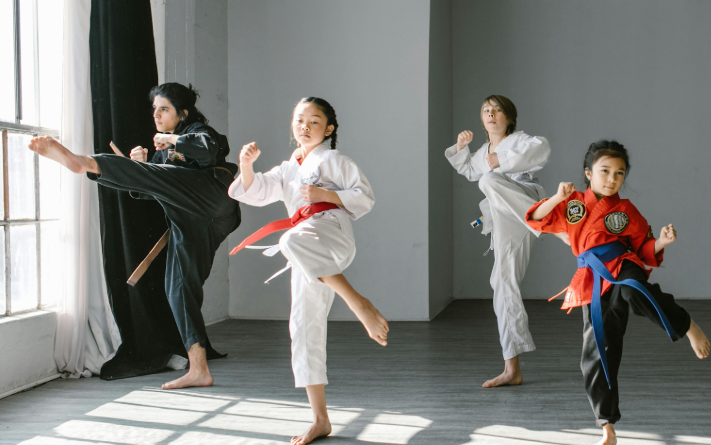
Starting a new physical activity can feel intimidating when you are out of shape. You may worry that you will struggle to keep up, feel uncomfortable around experienced students, or become too tired during your first class. These concerns are common, but they do not mean you need to become fit before beginning martial arts.
In fact, a properly structured beginner program can help you gradually improve your fitness while you learn new skills. Adults martial arts classes can accommodate people with different fitness levels, ages, backgrounds, and goals when instructors provide appropriate modifications and a gradual progression.
The key is to start at your current level instead of comparing yourself with people who have been training for months or years.
You Don’t Have to Get Fit Before You Start
One of the biggest mistakes beginners make is waiting until they are “fit enough” to join a martial arts class.
It is understandable. You might think you should lose weight, improve your stamina, or build strength first. But waiting for the perfect fitness level can make starting much harder.
Martial arts training itself can help develop:
- Cardiovascular endurance
- Strength
- Balance
- Coordination
- Flexibility
- Mobility
- Body awareness
- General fitness
You may feel tired during your first few sessions, and that is normal. Your body is becoming accustomed to movements and activity that may be unfamiliar.
Instead of asking whether you are fit enough to start, consider whether you are ready to begin gradually and consistently.
Choose a Beginner-Friendly Program
Not every martial arts class has the same pace or training style. If you have been inactive for a long time, choosing a program designed to accommodate beginners can make your experience much more comfortable.
When researching Adults martial arts classes, look for programs that clearly welcome people without previous experience.
A beginner-friendly class should ideally provide:
- Clear demonstrations
- Step-by-step instruction
- Controlled training intensity
- Opportunities to rest
- Appropriate modifications
- A respectful training environment
- Gradual progression
- Safety-focused coaching
You should not feel pressured to perform advanced techniques during your first few sessions.
Start With Realistic Goals
Your first goal does not need to be earning a belt, mastering complicated techniques, or becoming extremely fit.
Start with something simple.
For example, your first month could focus on attending classes consistently, learning basic movements, and becoming comfortable with the training environment.
Useful beginner goals might include:
- Attend two classes each week.
- Learn the basic stance and movement patterns.
- Improve your stamina gradually.
- Remember a few fundamental techniques.
- Become more comfortable working with a partner.
- Learn proper warm-up and recovery habits.
Small goals are easier to maintain and can help prevent the frustration that comes from expecting dramatic changes immediately.
What Your First Class May Feel Like
Your first class may feel unfamiliar, especially if you have not exercised regularly.
A typical beginner session may include a warm-up, technique instruction, individual practice, partner drills, and conditioning or cooldown exercises. The exact structure depends on the martial art and school.
You may notice that some movements feel awkward at first.
That is completely normal.
Your brain and body are learning new movement patterns. Even a simple stance or footwork drill may require concentration when you have never practiced it before.
Do not worry if you cannot perform everything perfectly. Beginners are expected to learn gradually.
Pace Yourself During Training
When people feel nervous about being out of shape, they sometimes make the opposite mistake and push themselves too hard.
Trying to prove that you can keep up with experienced students can leave you exhausted and may make it harder to return for your next class.
Instead, focus on controlled effort.
During your first few weeks:
- Take short breaks when necessary.
- Drink enough water.
- Pay attention to your breathing.
- Focus on technique instead of speed.
- Tell your instructor if you need a modification.
- Stop if you experience unusual or sharp pain.
- Give your body time to recover between sessions.
Consistency is more useful than one extremely difficult workout.
You Will Probably Feel Sore
Some muscle soreness can happen when your body starts doing unfamiliar movements. Martial arts may use muscles and movement patterns that you do not normally use during everyday activities.
This does not mean you need to train through significant pain.
There is an important difference between normal exercise fatigue and an injury. If something feels sharp, severe, or unusual, stop and seek appropriate professional advice rather than assuming you simply need to push harder.
Recovery should be considered part of your training.
Getting adequate sleep, staying hydrated, eating appropriately, and allowing your body time to recover can all help you maintain a consistent routine.
Pick a Style That Matches Your Goals
Different martial arts place different demands on the body. There is no single style that every beginner must choose.
For example:
Striking-Based Training
Boxing, kickboxing, karate, and taekwondo can involve footwork, punches, kicks, combinations, coordination, and conditioning.
These may appeal to adults who enjoy active, stand-up training.
Grappling-Based Training
Brazilian Jiu-Jitsu and other grappling styles involve close-contact movement, positions, escapes, balance, and controlled partner work.
These can provide a different type of physical and technical challenge.
Traditional Martial Arts
Some traditional programs place greater emphasis on forms, technique, discipline, structured progression, and controlled practice.
When choosing a style, consider what you actually enjoy. Enjoyment matters because a program you look forward to attending is easier to maintain.
Don’t Compare Yourself With Experienced Students
Walking into a martial arts school can sometimes feel intimidating when you see experienced students performing techniques effortlessly.
Remember that you are seeing their current ability, not where they started.
Someone who has trained for several years has had hundreds of opportunities to practise movements that may be completely new to you.
Your comparison should be with your previous self.
Instead of asking, “Why can’t I do that?”
Ask:
- Can I perform the movement better than last week?
- Am I recovering faster?
- Do I understand the technique more clearly?
- Am I becoming more comfortable in class?
- Can I train more consistently?
This mindset can make the learning process much more enjoyable.
Tell Your Instructor About Your Fitness Level
There is no reason to hide the fact that you are out of shape.
A good instructor needs to know enough about your experience and limitations to help you train appropriately.
Before class, you can explain that you are new to martial arts and have not exercised regularly. If you have a previous injury or physical limitation, mention it as well.
This allows the instructor to suggest appropriate modifications when needed.
You should never feel embarrassed about taking a break or asking how to perform an exercise correctly.
Build Fitness Outside the Dojo or Gym
Martial arts can become the center of your fitness routine, but simple activities outside class can also help you adapt.
You do not need an extreme workout plan.
Depending on your current ability, you might begin with:
- Short walks
- Gentle mobility exercises
- Basic bodyweight movements
- Light stretching
- Easy cycling
- Gradually increasing daily activity
The objective is to make movement a regular part of your lifestyle.
If you have been inactive for a long time or have concerns about starting exercise, discussing your plans with a qualified healthcare professional can be appropriate before beginning.
Expect Progress to Happen Gradually
The first few weeks may be challenging. Your breathing may become heavy quickly, certain movements may feel uncomfortable, and remembering techniques can require considerable concentration.
With consistent training, many beginners find that familiar movements become easier.
You may notice changes such as:
- Better coordination
- Improved stamina
- Greater confidence
- More comfortable movement
- Better balance
- Increased motivation
- Improved ability to handle challenging workouts
Progress does not always appear immediately on the scale or in the mirror. Sometimes the first sign is simply realizing that a class that once felt exhausting has become manageable.
Don’t Ignore the Mental Benefits
Martial arts is not only physical exercise.
Learning techniques requires concentration and attention. Following instructions, remembering combinations, and working with training partners can keep your mind engaged throughout a session.
For adults dealing with busy schedules, training can also provide a structured activity that takes attention away from work and everyday responsibilities for a while.
Over time, learning difficult skills and seeing gradual improvement can also contribute to a stronger sense of confidence.
Create a Routine You Can Maintain
A realistic schedule is more valuable than an ambitious routine that you abandon after two weeks.
If you are starting from a low fitness level, two classes per week may be a reasonable starting point depending on the program and your individual circumstances.
Once your body adapts, you can decide whether you want to increase your training frequency.
Try to treat your class schedule like an appointment. Choose days and times that fit realistically around your work, family, and other responsibilities.
Consistency becomes much easier when training is part of your normal routine rather than something you decide about every day.
Know What to Bring to Your First Class
You usually do not need expensive equipment immediately.
Ask the school what beginners should wear and whether any equipment is required. In many cases, comfortable athletic clothing and water are enough for an introductory session.
Depending on the style, students may eventually need items such as uniforms, gloves, protective equipment, or other training gear.
Avoid buying everything before you know whether you enjoy the program. Start with the essentials and purchase additional equipment as your instructor recommends.
Confidence Builds Along With Fitness
One of the most rewarding parts of starting martial arts as an adult can be realizing that you are capable of learning something completely new.
You may struggle with a technique during your first week and perform it successfully several weeks later. You may initially need frequent breaks and eventually find that your stamina has improved.
Those small changes can build confidence.
The goal is not to become the strongest person in the room. It is to become more capable than you were when you started.
Conclusion
Being out of shape should not automatically prevent you from starting martial arts. Beginner-friendly Adults martial arts classes can provide a structured way to develop fitness, coordination, confidence, discipline, and practical skills while progressing at a manageable pace.
Start with realistic expectations, choose a supportive program, communicate openly with your instructor, and avoid comparing yourself with experienced students. Most importantly, focus on consistency rather than trying to do everything at once.
You do not need to arrive at your first class already fit, flexible, or skilled. You simply need to be willing to start where you are and give yourself time to improve.