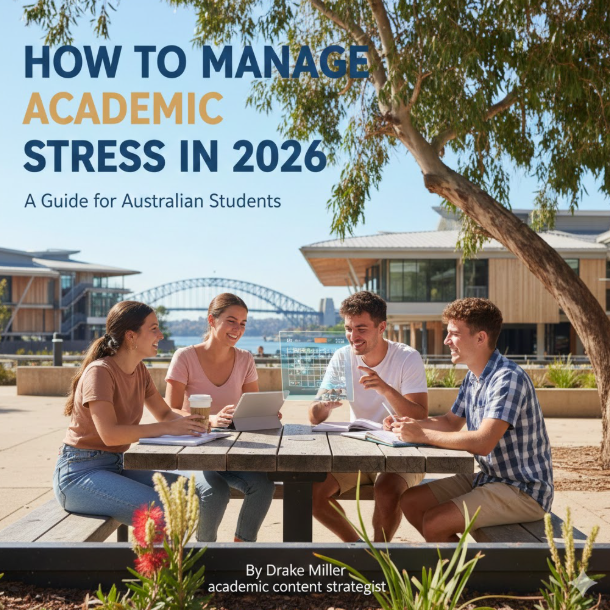
By Drake Miller academic content strategist
The pursuit of academic excellence is a journey filled with growth, but for many students in Australia—from high school seniors tackling the HSC, VCE, or QCE to university students completing post-graduate degrees—it is also a journey fraught with pressure.
As we move through 2026, new data from Education Matters suggests that 47% of Australian students find this academic year more stressful than previous years, citing “screen fatigue” and the competitive nature of the post-pandemic job market. In this landscape, “stress” has become a constant companion. However, academic success should not come at the cost of your mental well-being.
Understanding the Australian Academic Stress Epidemic
In Australia, the pressure to secure high ATAR scores or maintain a Distinction average in university often leads to burnout. Academic stress manifests in various ways: persistent fatigue, irritability, and even physical symptoms like tension headaches.
The root cause often lies in a lack of “balance.” When your identity becomes solely tied to your grades, a single difficult assignment can feel like a personal failure. This is where I, along with the team at Myassignmenthelp.services, suggest a shift in perspective: viewing education as a marathon, not a sprint.
1. Master the Art of Prioritization (The Eisenhower Matrix)
One of the biggest contributors to stress is the feeling of being overwhelmed by a “mountain” of work. To combat this, you must distinguish between what is urgent and what is important. When deadlines pile up, some students even start searching phrases like “ pay to do my assignment ” out of panic rather than planning—but building a smarter prioritization system is a far more sustainable solution.
Quadrant 1 (Urgent & Important): Tasks with immediate deadlines (e.g., a thesis due tomorrow).
Quadrant 2 (Not Urgent but Important): Long-term planning, studying in advance, and self-care. This is your “Success Zone.”
Quadrant 3 (Urgent but Not Important): Minor emails or notifications.
Quadrant 4 (Neither): Mindless scrolling on social media.
By focusing on Quadrant 2, you reduce the number of “emergencies” in Quadrant 1, significantly lowering your daily cortisol levels and regaining control over your academic life.
2. Embrace the Pomodoro Technique
Human brains are not designed to focus on complex academic material for five hours straight. Forcing yourself to do so leads to “diminishing returns,” where you retain less than 20% of what you read.
The Pomodoro Technique involves:
- Studying for 25 minutes with zero distractions.
- Taking a 5-minute break (away from screens).
- Repeating this four times, then taking a 30-minute break.
3. Establish Clear Boundaries: The “Digital Sunset”
With the rise of hybrid learning in 2026, the line between school and home has blurred.
- Create a dedicated workspace: Use a specific corner only for study. This “primes” your brain for focus when you sit there.
- The Digital Sunset: Set a “log-off” time. After 8:00 PM, close the laptop. This allows your nervous system to wind down, preventing the “blue light” insomnia common among VCE/HSC students.
4. Physical Activity: The Ultimate Stress Buster
In Australia, we are blessed with incredible outdoor spaces. Whether it’s a morning surf, a walk through the Royal Botanic Gardens, or a session at the local gym, movement increases endorphins. Exercise isn’t “time lost” from studying; it is an investment in your brain’s cognitive function.
5. The Power of Seeking Academic Support
Many students fall into the trap of thinking they have to do it all alone. Perfectionism often breeds a fear of asking for help. However, top-performing students are usually those who know how to utilize their resources. Whether it’s joining a peer study group or visiting a campus counselor, reaching out is a sign of strength. If you find yourself drowning in technical requirements or complex research papers, Myassignmenthelp.services provides assignment services Australia that can provide the guidance needed to bridge the gap between theory and practice. This allows you to manage your workload more effectively and reduces the pressure of looming deadlines.
6. Practice Mindfulness and “Single-Tasking”
We live in an age of multi-tasking, but the brain actually “switches” between tasks rather than doing them simultaneously. This “switch cost” drains your energy.
- Deep Breathing: Take three deep breaths before opening a difficult textbook.
- Focus: Giving 100% of your attention to the task at hand finishes the work faster than checking your phone every two minutes.
7. Reframe Your Relationship with Failure
In the high-stakes environment of Australian high schools and universities, a “bad” grade can feel like the end of the world. It is vital to cultivate a Growth Mindset. Understand that a grade is a reflection of a specific piece of work at a specific moment—it is not a reflection of your worth or your future potential.
8. Prioritize Sleep for Memory Retention
Scientifically, pulling all-nighters is the worst thing you can do for your grades. Sleep is when the brain encodes memory. Aim for 7–9 hours of sleep. A well-rested brain can complete in two hours what a sleep-deprived brain struggles to do in six.
See also: Understanding Private Digital Asset Trading: A Practical Overview of OTC Markets
Conclusion: You are More Than Your Student ID
The goal of education is to broaden your horizons, not to diminish your quality of life. By implementing these strategies—prioritizing tasks, setting boundaries, and knowing when to seek help—you can navigate the rigors of Australian academia without losing yourself.
Frequently Asked Questions
Q.1 How can Australian students manage stress during the HSC or VCE?
Managing year 12 exams requires a “marathon” mindset. Experts suggest creating a sustainable study schedule that includes “non-negotiables” like 8 hours of sleep and physical activity. Breaking subjects into smaller “manageable chunks” and using practice exams can reduce the fear of the unknown. If the pressure feels unmanageable, speaking to a school wellbeing coordinator early is key.
Q.2 Does the 2026 social media ban for minors help with academic stress?
While the recent social media restrictions aim to reduce “digital noise” and improve mental health, some students find it challenging to access informal study communities on platforms like TikTok or Discord. To adapt, focus on face-to-face study groups or university-moderated portals. Replacing scrolling with “real-life” social connections can significantly lower cortisol levels.
Q.3 What are the signs of academic burnout in university students?
Burnout isn’t just “feeling tired.” According to Drake Miller, key signs include persistent cynicism towards your course, a lack of motivation despite deadlines, and physical symptoms like headaches or changes in appetite. If you find yourself staring at a screen for hours without retaining information, it is a sign you need a structured break or external academic support.
Q.4 How can international students in Australia handle academic and financial pressure?
International students often face the “triple pressure” of cultural adjustment, high tuition costs, and academic expectations. Utilizing campus counseling services and international student offices is a proactive step.
Q.5 Why is sleep more effective for grades than late-night “cramming”?
The brain uses sleep to consolidate memory. When you skip sleep to study, you are essentially trying to fill a bucket with a hole in the bottom. Research shows that well-rested students perform better in problem-solving and critical thinking tasks—core components of the Australian tertiary curriculum—than those who rely on caffeine-fueled all-nighters.
About the Author: Drake Miller
Drake Miller is a senior content manager and academic strategist at Myassignmenthelp.services. With over a decade of experience in the Australian education sector, Drake specializes in developing student-centric resources that bridge the gap between academic pressure and mental well-being. He is a frequent contributor to student forums and educational blogs, dedicated to helping the next generation of Australian professionals succeed without burnout.